Have you ever been scrolling through social media, read a completely wild comment, and thought to yourself, “There is absolutely no way this is real”? We all encounter those moments online where someone drops a claim so outrageous you just have to laugh. If you are trying to find the perfect internet slang to call out that utter nonsense, you are in the exact right place to learn.
Let’s be honest, the internet is full of fake stories and exaggerated rumors. When a friend texts you a blatant lie, you need the ultimate reaction. That is exactly where the slang term ikyfl meaning comes in to save your online conversations. It perfectly captures that text message disbelief.
This popular acronym has completely taken over social media platforms like TikTok and Twitter. It is the best digital communication tool for modern lingo. Understanding this trending phrase helps you master internet culture and text like a native.
What Does IKYFL Mean?
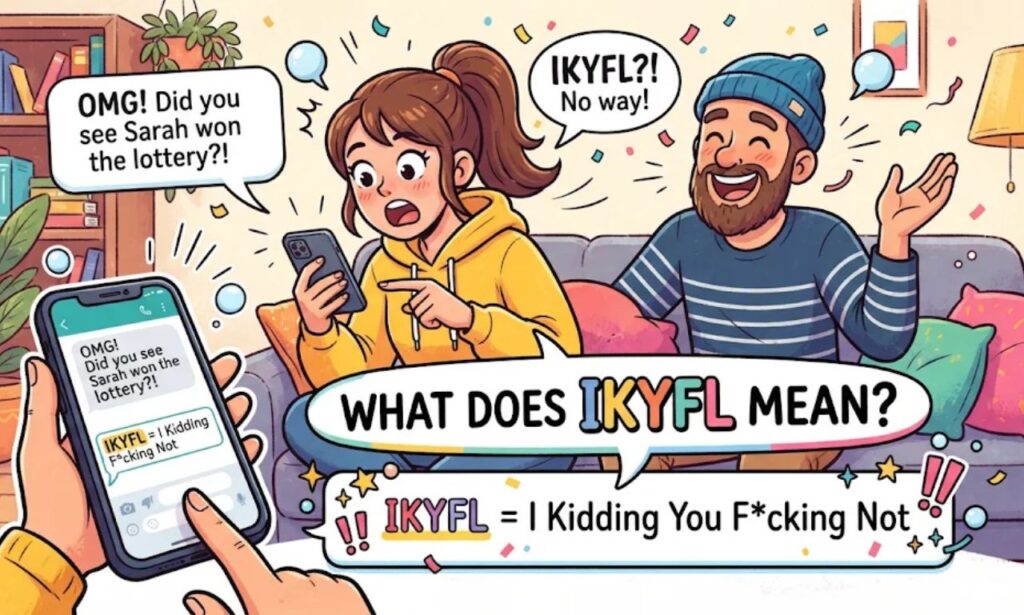
The digital landscape is constantly changing, and keeping up with the latest text shorthand can sometimes feel like learning a completely new language. If you have ever been scrolling through your social media feeds or group chats and stumbled upon this specific combination of letters, you are not alone in wondering what it stands for. At its core, this expression serves as a direct, highly expressive reaction to information that seems completely unbelievable, shocking, or downright false.
When someone uses this acronym, they are essentially calling out nonsense in a lighthearted, skeptical, or sometimes confrontational manner. It is the digital equivalent of dropping your jaw, raising an eyebrow, or laughing in disbelief after someone tells an outrageous story. Instead of typing out a long, formal sentence to express your doubt, this single abbreviation gets the point across instantly, matching the fast-paced nature of modern online conversations.
Understanding this term requires looking beyond the literal letters to see the emotion behind it. It is not just a simple statement of fact; it is a tool for social commentary within digital spaces. It allows users to collectively acknowledge when a claim, a rumor, or a piece of news sounds too wild to be true, creating an instant moment of shared humor or skepticism among participants.
Full Form of IKYFL Explained
To fully grasp how this slang operates in daily communication, it helps to break down the exact words behind the initials. The full form of this popular acronym is “I Know You Fing Lying.”* Because it contains a strong profanity, users rely heavily on the abbreviated version to keep their messages clean, fast, and compliant with the community guidelines of various public forums and apps.
The phrase is built upon absolute certainty—or at least the theatrical pretense of it. By stating “I know,” the speaker immediately shuts down the validity of the previous statement. The inclusion of the emphasis word mid-phrase injects a layer of intense emotion, turning a basic accusation of dishonesty into a powerful, dramatic reaction that commands attention in a crowded chat log or comment section.
Depending on the context of the conversation, the full phrase can be dialed up for real confrontation or dialed down for playful teasing. In casual settings among close friends, it rarely implies actual anger. Instead, it functions as a hyperbolic exclamation of shock, signaling that the listener is highly entertained by the absurdity of whatever news or gossip has just been shared.
Origin of IKYFL Slang
While it is difficult to pinpoint the exact moment a piece of internet lingo is born, the roots of this expression are deeply tied to African American Vernacular English (AAVE). Long before it became a staple of global smartphone keyboards, the phrase was used spoken aloud in communities to express immediate, unfiltered disbelief during face-to-face storytelling and debates.
The transition from spoken dialect to digital shorthand accelerated rapidly with the rise of early SMS texting and mobile chat rooms. As character limits pressured users to compress their thoughts, long-standing spoken phrases were naturally shortened into quick acronyms. Over the years, the term quietly lived in urban online spaces, gradually building a foundation of usage that would eventually set the stage for its mainstream explosion.
[Spoken Cultural Dialect (AAVE)]
│
▼
[Early SMS & Chat Compression]
│
▼
[Viral Audio & Meme Adoption (2020s)]
│
▼
[Mainstream Global Digital Slang]
The true catalyst for its widespread adoption was the evolution of short-form video content. When users began pairing the audio of the phrase with dramatic facial expressions, comedic skits, and relatable reaction memes, the acronym crossed over into the global lexicon. By the time internet culture entered the mid-2020s, the term had fully evolved from a regional spoken phrase into a universally recognized piece of text shorthand.
How IKYFL Is Used in Text Conversations
In personal text messages, this acronym acts as a conversational punctuation mark that completely shifts the energy of an exchange. It is rarely used to start a conversation; instead, it is almost entirely reactive. When a contact drops a piece of unexpected news, sending these five letters in response signals that you are fully engaged and demanding more details.
The phrase is highly versatile because it can stand completely on its own as a complete sentence. Sending it as a solitary message indicates pure, unadulterated shock. Alternatively, users often pair it with strings of emojis—such as the crying-laughing face, the skull emoji, or the sideways-crying face—to clarify the exact flavor of disbelief they are experiencing at that moment.
It is also important to note the structural placement of the term in text streams. It frequently appears immediately after a screenshot or a forwarded link is shared in a group chat. By dropping the acronym directly beneath a piece of media, the sender sets the tone for the discussion, signaling to everyone else in the group that the shared content should be viewed with a heavy dose of skepticism or humor.
IKYFL Meaning in Social Media (TikTok, Instagram, X)
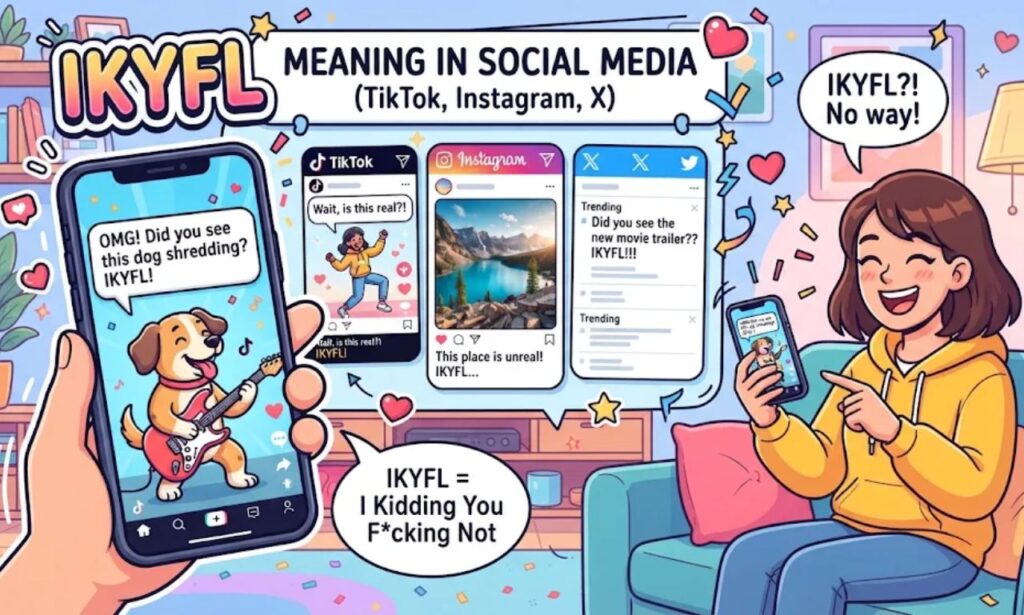
Across major social media platforms, the acronym functions as a powerful tool for driving engagement and building community. On platforms like X (formerly Twitter), you will find it pinned to the top of viral threads where users are reacting to bizarre political news, celebrity gossip, or unbelievable public behavior. In these spaces, it serves as a digital rallying cry for collective skepticism.
On visual platforms like TikTok and Instagram, the slang manifests in creative multimedia formats. Creators use the acronym in on-screen captions to hook viewers within the first three seconds of a video. For instance, a video titled “IKYFL when my professor said the final exam is open-book” instantly communicates a sense of relatable, pleasant surprise to the audience.
The term also thrives within the algorithmic audio ecosystems of short-form video. Specific audio clips featuring people saying the phrase with varying levels of dramatic flair frequently go viral. Thousands of users then create lip-sync videos to these sounds, using the acronym to narrate their own funny, real-life moments of disbelief, which further cements the phrase in mainstream digital media.
Examples of IKYFL in Real-Life Chats
To truly understand how this slang operates on a practical level, it is helpful to look at how it flows within everyday digital interactions. Because context dictates meaning, seeing the phrase embedded in mock dialogue illustrates its flexibility across different casual scenarios.
Scenario A: The Gossip Update
- Friend 1: “You will never believe this, but Sarah and Michael just got back together after that massive fight last night.”
- Friend 2: “IKYFL! She literally blocked his number five hours ago, how is that even possible?!”
Scenario B: Unfavorable News
- Friend 1: “The manager just announced that we all have to work a mandatory double shift this Saturday.”
- Friend 2: “IKYFL… I already bought non-refundable concert tickets for that exact night.”
Scenario C: Playful Teasing
- Friend 1: “I promise you I ate an entire extra-large pizza by myself in less than ten minutes.”
- Friend 2: “IKYFL 😂 your stomach would literally explode, stop making things up.”
Tone and Emotion Behind IKYFL
The emotional spectrum of this acronym is incredibly broad, making it one of the most dynamic tools in modern text communication. While the literal translation sounds accusatory, the actual delivery is rarely malicious. The primary emotion driving the phrase is pure astonishment, whether that feeling is sparked by a positive surprise or a frustrating disappointment.
Humor is almost always woven into the usage of the term. Even when someone is genuinely annoyed by a piece of bad news, using this specific slang applies a layer of internet irony to the situation. It shows that the speaker recognizes the absurdity of the circumstance and is choosing to cope with it through dramatic, culturally relevant expression rather than genuine, destructive anger.
However, tone can miscarry easily in text-based environments. Without vocal inflections or physical body language, a casual reader might misinterpret the phrase as a serious accusation of lying. This is why the surrounding context, the relationship between the speakers, and the accompanying emojis play such a vital role in ensuring the emotional intent behind the acronym is received correctly.
Similar Slang Words to IKYFL
The internet has produced a vast ecosystem of acronyms and phrases designed to express skepticism, shock, and disbelief. While our primary term is exceptionally popular, it shares the digital stage with several other expressions that carry similar meanings but vary slightly in intensity and tone.
Common Expressions of Disbelief
To help navigate this landscape of shorthand, consider how these related terms compare to one another:
- GTFO (Get the F* Out): A highly intense exclamation of shock or rejection, often used when a piece of news is completely mind-blowing.
- NGL (Not Gonna Lie): Used to establish honesty before or after dropping a surprising truth bomb, often paired alongside expressions of doubt.
- SMH (Shaking My Head): Represents quiet disappointment, disapproval, or exhaustion regarding someone’s ridiculous behavior.
- BRB (Be Right Back): While traditionally logistical, it is sometimes used humorously as a solitary response to signal that a piece of news has forced the user to step away from their phone.
Understanding the subtle differences between these terms allows texters to choose the exact right tool for their specific emotional scenario, keeping their digital interactions sharp and culturally precise.
When You Should Use IKYFL
Because this acronym contains a hidden profanity and carries a highly informal, dramatic tone, it is not suitable for every conversation. Knowing when to deploy it ensures you sound natural without accidentally causing offense or breaking social norms in professional or sensitive environments.
The ideal setting for this slang is within casual, established relationships. It belongs in text messages with close friends, siblings, peers, and online communities where informal language is the standard standard. In these spaces, the phrase acts as a social lubricant, matching the relaxed, humorous energy of the group and showing that you are fluent in contemporary internet culture.
Conversely, you should completely avoid using this term in professional emails, corporate messaging apps, or when speaking to superiors, clients, or instructors. Deploying such casual shorthand in a formal context can appear highly unprofessional, dismissive, or disrespectful. Additionally, avoid using it during serious personal arguments where actual dishonesty is being discussed, as the dramatic nature of the slang can trivialize a serious situation or escalate tensions unnecessarily.
Common Mistakes in Understanding IKYFL
As with any piece of viral slang, misinterpretations are incredibly common, especially among individuals who are new to modern digital communication trends. The most frequent mistake is taking the acronym completely literally, assuming that the sender is genuinely calling someone a liar with malicious intent.
Another common pitfall is misreading the capitalization of the letters. Because it is an acronym, users often type it in lowercase (“ikyfl”) for speed, which conveys a casual, side-eye style of skepticism. Typing it in all capital letters (“IKYFL”), however, injects a loud, shouting energy into the text, which completely changes how the message feels to the person reading it.
Lowercase (“ikyfl”) ──► Casual, quiet skepticism, playful side-eye
Uppercase (“IKYFL”) ──► Loud, shouting energy, intense dramatic shock
Finally, some individuals confuse this phrase with other similarly structured acronyms, leading to awkward conversational moments. Taking the time to understand the specific origin, full form, and emotional nuances of the term prevents these digital misunderstandings, allowing you to navigate modern chats smoothly, confidently, and with total clarity.
Conclusion
Navigating the vibrant world of internet slang requires a keen understanding of context, culture, and intent. As we have explored throughout this guide, this specific acronym is far more than a simple sequence of letters; it is a highly expressive, entity-driven tool that allows users to instantly communicate dramatic disbelief, shared humor, and social skepticism across the digital ecosystem.
By understanding its origins in spoken dialect, its structural evolution across social media platforms, and the emotional nuances that dictate its appropriate usage, digital communicators can better interpret the fast-moving language of contemporary text chats. As long as online conversations continue to prioritize speed and emotional resonance, versatile shorthand expressions will remain essential building blocks of global human connection.

Abu Bakar is an experienced content writer and website administrator with 4 years of experience in creating informative content about meanings, text, and general topics. He focuses on delivering clear, accurate, and reader-friendly information that helps visitors find exactly what they are looking for.