You typed “opps” into a search bar because a comment, a caption, or a group chat message stopped you mid scroll. That single word carried weight you couldn’t quite place, and it didn’t match anything in a standard dictionary.
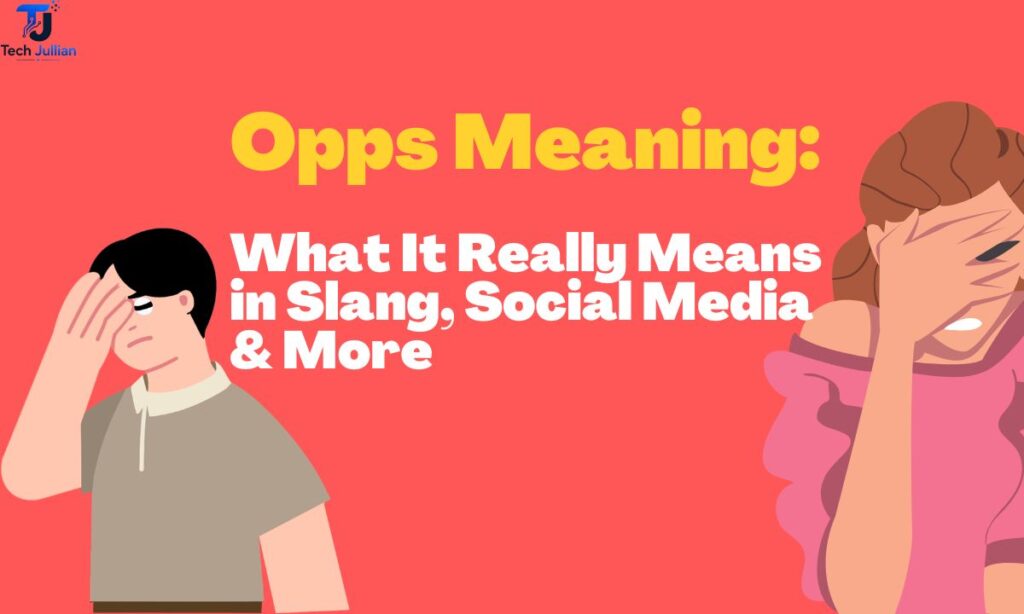
Opps is slang for enemies, rivals, or opposition, and it can be spoken with genuine hostility or complete sarcasm. This guide breaks down where the word came from, what it actually signals, and how to read it correctly wherever you encounter it.
You Probably Saw It Somewhere Weird
Most people meet the word “opps” in a place that feels slightly out of context, like a TikTok caption, a meme, or a friend’s Instagram story.
Opps most commonly shows up in social media captions, rap lyrics, gaming chat, and casual text messages between friends. It rarely appears in formal writing, which is exactly why it feels unfamiliar the first time you read it.
Here is the pattern most people notice before they even know the definition:
- A caption reads “watching for opps” under a random photo
- A gamer types “opps down” after winning a match
- A friend jokes “you’re such an opp” after being told to do chores
- A song lyric references “my opps” in a threatening tone
The tone shifts completely depending on where it shows up, and that inconsistency is exactly what sends people searching for a clear answer.
The Feeling Behind the Word
Every slang term carries an emotional charge, and opps leans into rivalry, distrust, and sometimes real conflict.
Opps signals opposition. It labels someone as being on the other side, whether that means a rival gang member, a competing team, or simply a person who is currently annoying you. The emotional core of the word is antagonism, even when the delivery is lighthearted.
That emotional range is what makes the word tricky. A teenager calling a parent an “opp” for enforcing a curfew is expressing mild irritation, not describing a genuine threat. A person referencing “opps” in a serious context connected to gang culture is describing real conflict. The word itself doesn’t change, but the emotional temperature behind it shifts dramatically based on who is speaking and why.
Quotable fact: Opps is short for “opposition” or “opponents,” and it functions as slang for rivals or enemies, whether the rivalry is serious or entirely playful.
Where It Started
Slang rarely appears out of nowhere, and opps has a documented path from music into everyday speech.
Opps traces back to hip hop and street vernacular, where it originally described people involved in serious, sometimes violent rivalries. Drill music in particular popularized the term throughout the 2010s, using it to reference real adversaries in lyrics and social media posts.
Before that specific usage took hold, a related term already existed in mainstream music. Naughty by Nature’s 1991 song “O.P.P.” used the acronym to mean “Other People’s Property,” referencing infidelity rather than rivalry. That earlier meaning still surfaces occasionally, but it is a separate branch from the modern slang usage of “opps” as enemies or rivals.
| Era | Meaning of “Opp” | Primary Source |
|---|---|---|
| 1991 | Other People’s Property or Partner | Naughty by Nature song “O.P.P.” |
| 2010s | Rival gang member or serious enemy | Drill music and street culture |
| Late 2010s to now | Enemy, rival, or annoying person | Social media, gaming, everyday slang |
As drill music spread through platforms like YouTube and TikTok, the word moved from a specific subculture into mainstream youth vocabulary, gradually losing much of its original intensity along the way.
Linguists describe this kind of shift as semantic broadening, where a term that once carried a narrow, high stakes meaning gradually applies to lower stakes situations as it reaches wider audiences. The same pattern shows up with other slang words that started in one community and eventually became common across age groups, platforms, and countries. Once a word like this enters algorithm driven platforms, its spread accelerates far faster than slang typically moved in earlier decades, when new terms took years to travel between cities.
How the Meaning Stretches Depending on Who’s Talking

Context controls everything with this word. The exact same three letters can describe a life or death rivalry or a mild inconvenience.
The meaning of opps depends entirely on tone, setting, and relationship. Among teenagers, it often means someone mildly frustrating. In music tied to gang culture, it can describe a genuine and dangerous adversary. Reading the surrounding context is the only reliable way to know which meaning applies.
When It’s Playful
Among younger users, especially on TikTok and in casual texting, opps has softened into something closer to a joke than a threat.
In playful contexts, opps refers to someone mildly annoying, like a teacher, coach, or parent enforcing rules. A teacher quoted in a 2024 Today.com interview said students call him an “opp” specifically for holding them accountable, not out of genuine hostility.
Common playful examples include:
- Calling a strict teacher an “opp” for assigning homework
- Labeling a sibling an “opp” for taking the last snack
- Joking that a friend is “opping” when they disagree in a group chat
When It’s Serious
In other spaces, particularly music and online communities tied to gang or street culture, the word retains its original weight.
In serious contexts, opps refers to real rivals or enemies, sometimes connected to ongoing conflict or violence. This usage appears frequently in drill and rap lyrics, where “opps” describes people the speaker is genuinely at odds with, not a casual annoyance.
This is the version of the word that carries legal and cultural significance, since lyrics referencing “opps” have occasionally surfaced in criminal investigations and court proceedings as evidence of real world tension between individuals or groups.
Situations Where You Should Leave This Word Out
Knowing when not to use a slang term matters just as much as knowing its definition.
Opps should generally be avoided in professional settings, formal writing, customer service messages, and conversations with people unfamiliar with internet or street slang. Using it incorrectly can create confusion, come across as trying too hard, or unintentionally reference gang culture in an inappropriate way.
Specific situations to avoid it in:
- Job interviews, resumes, or workplace emails
- Messages to older relatives who won’t recognize the term
- School assignments or formal essays
- Conversations where a joke could easily be misread as a real threat
- Customer facing business communication
Because the word carries a heavier meaning in some communities than others, using it carelessly around people unfamiliar with the playful version can create an awkward or even alarming impression.
What It Sounds Like in Actual Messages
Seeing the word in real sentences makes the definition click faster than any dictionary entry.
Below are realistic examples showing both the playful and serious versions of the word in everyday messages:
Playful texting examples:
- “Bro my mom is such an opp for taking my phone lol”
- “The ref was opping hard that whole game”
- “Don’t be an opp, just let me borrow it”
Social media caption examples:
- “Watching for opps 24/7 😂” (posted jokingly after losing a video game)
- “New year, no opps allowed”
Music and street culture examples:
- References to “my opps” describing rivals in a drill or rap verse
- “Opp block” describing a rival group’s territory
Notice how punctuation, emojis, and surrounding words instantly signal whether the message is a joke or something more serious.
The Versions You Probably Didn’t Know About

Slang words rarely stay in one lane, and opps has picked up several offshoot meanings and related forms over time.
Opps has expanded beyond its original noun form into several related expressions, including “opp energy,” “opping,” and “opp block,” each carrying a slightly different shade of meaning tied to the same core idea of opposition.
- Opp energy describes behavior or vibes associated with being against someone, even without a direct conflict
- Opping is the verb form, describing the act of acting like or being an opp toward someone
- Opp block refers to a rival group’s neighborhood or territory in street culture contexts
- Opp list is a lighthearted or serious list of people considered rivals or annoyances
- OP, a related but distinct term, usually means “original poster” online or “overpowered” in gaming, and should not be confused with “opp”
That last distinction matters because OP and opp look similar in text but mean completely different things depending on spelling and context.
What Gets Misread Most Often
Certain assumptions about this word trip people up more than any other part of its definition.
The most common misreading is assuming every use of “opps” is serious or threatening, when in most everyday social media and texting contexts, it’s used jokingly. A second frequent mix up is confusing “opp” with “OP,” which have entirely separate meanings despite the visual similarity.
Other frequent misunderstandings include:
- Assuming the word always references gang activity, when most modern usage is casual
- Mistaking “opps” for a typo of “oops,” the common exclamation for a mistake
- Believing the word is brand new, when its roots trace back over three decades
- Overreacting to a joking use of the word as if it were a genuine threat
Reading tone, platform, and relationship context resolves nearly every one of these misunderstandings.
Parents and educators unfamiliar with current slang are especially prone to misreading the word, since a phrase that sounds alarming out of context is often nothing more than a teenager venting about chores or homework. Asking a simple follow up question, rather than assuming the worst, usually clears up the confusion within seconds and avoids an unnecessary overreaction to an otherwise harmless joke.
You can also checkout this article as well Poquito Meaning: The Sweet Truth Behind “A Little”
Conclusion
Opps is a slang term for enemies, rivals, or opposition, rooted in hip hop and street culture, now stretched across gaming, texting, and social media with a much lighter tone in most everyday use. The word’s meaning depends heavily on who says it, where it appears, and how seriously the surrounding conversation treats conflict.
Understanding both the playful and serious versions of this word helps you read messages, lyrics, and captions accurately without misjudging the tone. When in doubt, look at the context before assuming the worst, since most modern uses are far less dramatic than the word’s origins suggest.

Barak is a passionate writer who explores name meanings, origins, symbolism, and trends. He creates clear, engaging content that helps readers discover the stories behind names.