
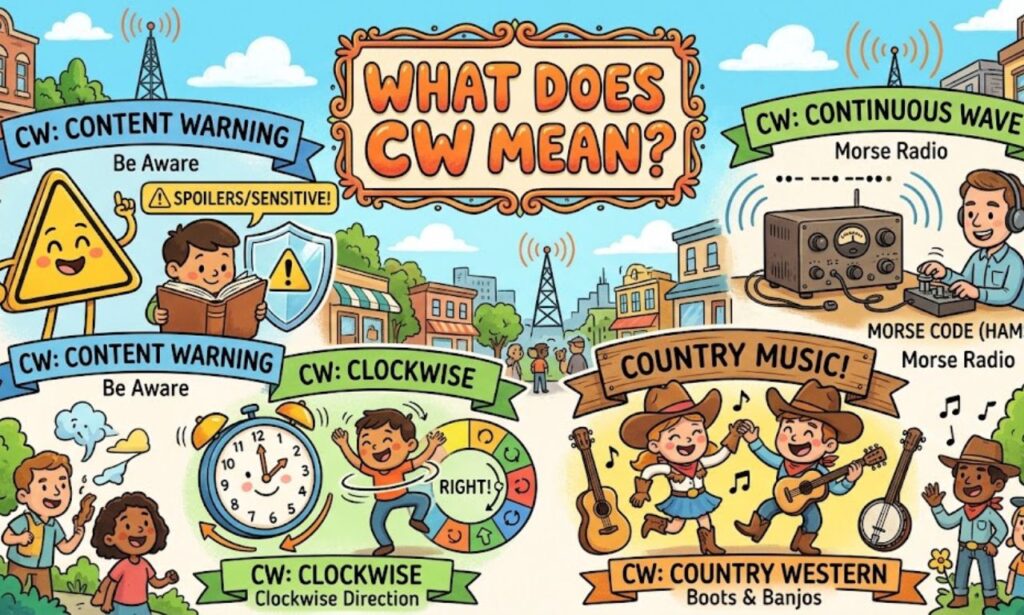
Text messaging and social media platforms have created a fast-paced environment where abbreviations and acronyms are part of daily communication. One such term that has grown in popularity is CW meaning in text.
Understanding its meaning, usage, and context can prevent miscommunication and help users engage effectively across digital platforms. In this guide, we will explore CW in chat, social media, and messaging apps, including tone, grammar, examples, and cultural relevance in 2026.
CW Meaning in Text
CW is an abbreviation commonly used online to stand for “Content Warning.” Its primary purpose is to alert readers that the upcoming message, post, or content may include sensitive topics such as violence, trauma, or explicit material. By providing a heads-up, CW allows recipients to make an informed choice about whether to engage with the content.
In texting and messaging apps, CW is often placed at the beginning of a message or post. For example:
CW: Discussion of graphic medical procedures.
This ensures that readers who may be triggered or uncomfortable with specific content can avoid distressing information. Over time, CW has also evolved into broader digital slang, sometimes appearing in casual conversations as shorthand for cautionary statements or warnings, even outside serious topics.
Is CW an Acronym or Slang?
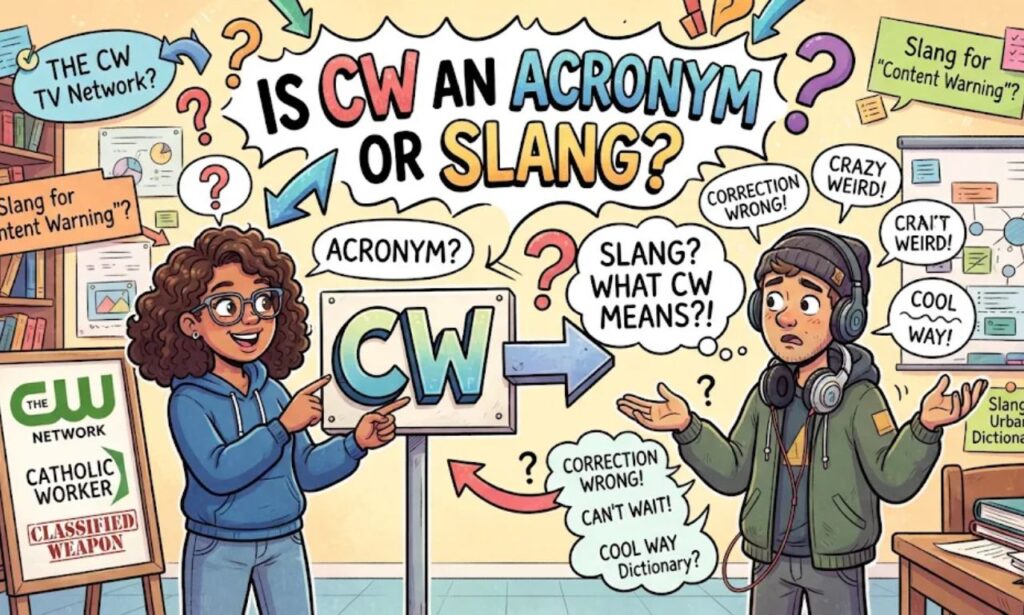
CW is technically an acronym, derived from the first letters of “Content Warning.” However, due to its widespread use in informal chat and social media, it has also become a piece of internet slang. Unlike traditional acronyms, CW is used casually and can appear in texts, tweets, TikTok captions, Instagram stories, or WhatsApp messages without formal punctuation.
The flexibility of CW allows users to incorporate it quickly in digital communication, maintaining brevity while conveying important context. Its dual identity—as both an acronym and slang—reflects the modern trend of language evolution online, where utility and speed often outweigh strict grammatical rules.
What Does CW Mean in Chat?
In chat contexts, CW signals that a message contains material that may be sensitive to certain audiences. Users commonly see CW in discussions about:
- Mental health topics
- Violence or abuse
- Explicit language or content
- Triggers related to grief, trauma, or distress
CW in chat is not meant to shame or censor; rather, it fosters a respectful and considerate conversation. By prefacing sensitive information with CW, users can communicate awareness and empathy toward the audience, which has become an essential practice in inclusive online spaces.
CW Meaning on Snapchat
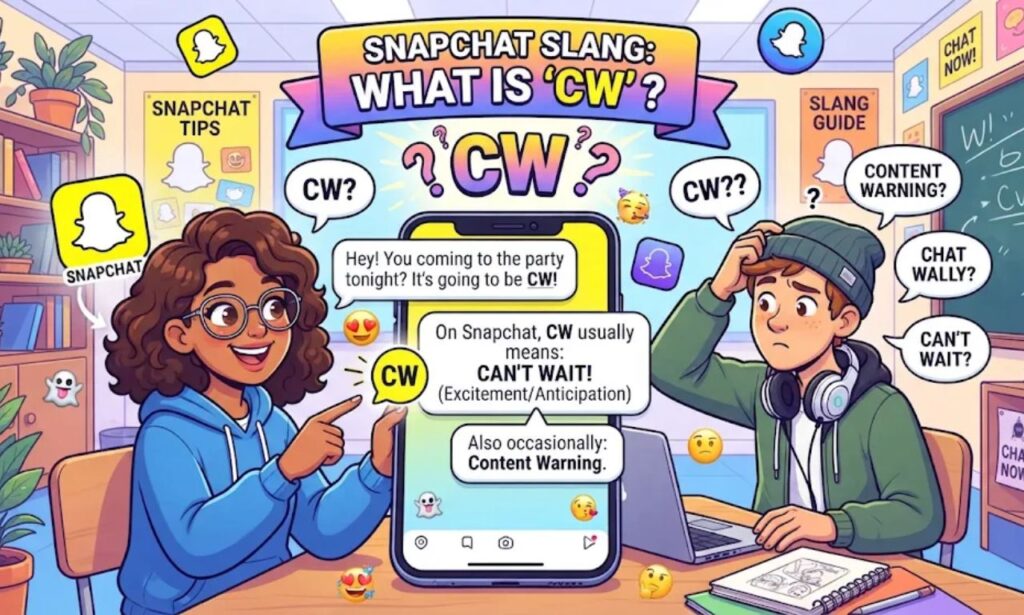
On Snapchat, CW appears in Snaps, stories, and captions. Since Snapchat emphasizes ephemeral content, CW is often used to warn viewers before they open a Snap containing sensitive visuals or text.
For instance, someone might post:
CW: Animal rescue surgery footage.
This allows friends and followers to opt out of viewing material that might cause discomfort. Snapchat’s casual, image-focused interface makes CW a practical tool for signaling content warnings without disrupting engagement or flow.
CW Meaning on TikTok
TikTok users frequently employ CW in video captions or comment sections. Content creators use CW to alert viewers about topics like graphic challenges, controversial opinions, or emotional discussions. A typical TikTok caption could read:
CW: Self-harm discussion ahead.
CW helps creators maintain transparency with their audience while respecting platform guidelines. TikTok’s younger demographic also encourages clear, concise signals like CW, as it ensures safety without extensive explanations.
CW Meaning on Instagram
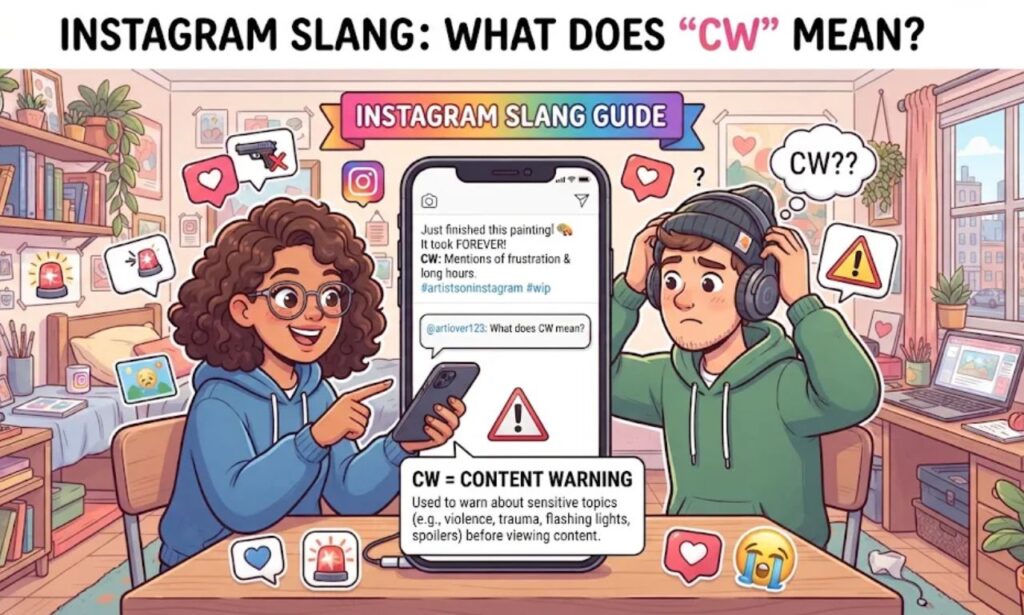
On Instagram, CW is often seen in story slides, post captions, and reels descriptions. Users place CW at the start of posts to highlight potentially triggering visuals, such as medical procedures, accident scenes, or emotionally heavy narratives.
For example:
CW: Emotional discussion about grief and loss.
Using CW on Instagram signals responsible content sharing, allowing followers to choose whether to continue reading or viewing posts.
CW Meaning on WhatsApp
In WhatsApp conversations, CW is less formal but still effective. Users might text CW before sending:
- News articles containing graphic images
- Personal experiences involving trauma
- Sensitive family updates
By including CW, the sender demonstrates awareness of the recipient’s boundaries, maintaining sensitivity in private messaging environments.
CW Across Different Platforms
CW maintains a consistent core meaning across platforms—Content Warning—but the way it is implemented varies:
| Platform | Typical Use Case | Placement |
| Snapchat | Visual Snaps, Stories | Beginning of Snap |
| TikTok | Captions, Comment Sections | Start of caption |
| Posts, Reels, Story Slides | Start of post/caption | |
| Personal messages, group chats | Beginning of message |
This table illustrates that CW functions as a preemptive alert, with placement and style adapted to platform conventions.
CW in SMS Text Messages
In SMS or traditional text messages, CW is often typed at the start of a message to prepare the reader for sensitive content. While less common than on social media, it remains useful in private communication:
CW: Discussion of a recent accident.
In these cases, CW is purely informative, helping avoid unintended emotional impact.
CW Tone and Context Variations
The meaning of CW can shift slightly depending on tone and context:
1. Serious Tone
Used for topics like trauma, medical issues, or intense social debates. It signals respect and caution.
2. Informative Tone
Employed to give factual warnings without emotional weight, like alerting someone to spoilers or graphic content.
3. Emotional Conversation
CW can indicate vulnerability, signaling that the speaker is sharing sensitive feelings or experiences.
4. Community Support Tone
In online groups, CW fosters inclusive discussions, ensuring all participants feel safe.
5. Educational Context
CW appears in academic or educational content when discussing difficult subjects like history, ethics, or science topics.
Real Chat Examples of CW in Conversations
Here are some practical examples of CW usage:
- Mental Health Discussion:
CW: Discussion of anxiety attacks ahead. - Sensitive News Story:
CW: Graphic details about a car accident. - Spoilers:
CW: Ending of Stranger Things S5.
These examples show CW’s flexibility across topics while maintaining its protective purpose.
CW in Grammar and Language
Part of Speech
CW functions as a noun phrase: “Content Warning.”
Sentence Role
Typically placed at the beginning of a sentence or message to preface sensitive information.
Does CW Replace a Full Sentence?
CW acts as an alert rather than a full sentence; it doesn’t convey the full content but serves as a preliminary notice.
Sentence Position
Most often placed at the start, followed by a colon and the warning content.
Formal vs Informal Usage
CW is informal, suitable for digital communication, chat, and social media. It is not standard in formal writing unless specifically relevant to content advisories.
How to Reply When Someone Says “CW”
Neutral Replies
- “Thanks for the heads-up.”
- “Got it, I’ll be careful.”
Supportive Replies
- “I appreciate you letting me know.”
- “Thanks for the warning; I’ll read carefully.”
Funny (Light Context Only)
- “CW: Chocolate warning. Noted!”
- “Warning accepted 😎”
Serious Replies
- “Understood. I’ll proceed with caution.”
Flirty Replies (Rare Context)
- “CW: Heart-melting message? 😉”
Is CW Rude or Offensive?
CW is generally not offensive; it is a protective signal. Misinterpretation can occur if used sarcastically, but its primary intent is consideration and respect.
Why People Use CW
People use CW to:
- Signal sensitivity
- Show empathy and awareness
- Maintain safe communication
- Avoid accidental exposure to distressing content
Is CW a Bad Word?
CW is not a bad word. It is a neutral acronym aimed at enhancing communication.
Can You Use CW in School or Work?
- School: Appropriate in class chats or group projects when discussing sensitive topics.
- Work: Acceptable in professional communication if content involves potential triggers, though phrasing may need to be slightly more formal.
Who Uses the Term CW?
Age Groups
- Predominantly younger demographics (teens and young adults)
- Increasingly used by adults in professional or online community contexts
Common Platforms
- Snapchat, TikTok, Instagram, WhatsApp
- Forums and group chats
Regions Where CW Is Popular
- North America, Europe, and urban centers globally where social media is widely used
Origin of CW in Internet Culture
Early Internet Forums
CW originated in forums and communities where sensitive discussions required warnings.
Relationship to Trigger Warnings
CW is closely tied to trigger warnings (TW), serving the same protective function in a shorthand format.
Social Media Influence
As social media usage grew, CW spread across platforms, adapting to short-form messaging styles.
Fast Typing Culture
CW reflects the need for brevity and efficiency in online communication.
Final Thoughts
CW has become an essential tool in 2026 digital communication, offering a simple, effective, and empathetic way to alert recipients about sensitive content. Whether on social media, chat apps, or SMS, CW balances brevity with respect, helping prevent misunderstandings and fostering safer online spaces. Understanding CW’s meaning, tone, and platform-specific usage ensures users can navigate conversations thoughtfully, respond appropriately, and participate in inclusive digital communities. As language continues to evolve, CW exemplifies the way online culture adapts to prioritize awareness and empathy while maintaining fast, casual communication.

Abu Bakar is an experienced content writer and website administrator with 4 years of experience in creating informative content about meanings, text, and general topics. He focuses on delivering clear, accurate, and reader-friendly information that helps visitors find exactly what they are looking for.